+ Tax
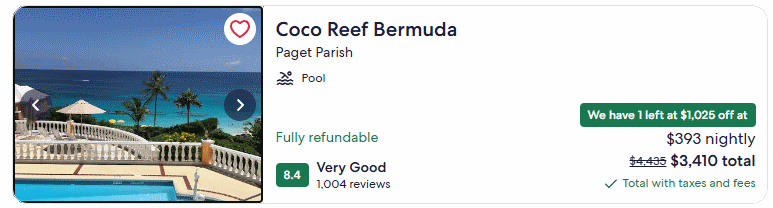
Total: US$ 744.24
372.12/person
https://www.telegraph.co.uk/travel/visit-bermuda/how-to-spend-seven-days/
Top June Snorkeling Spots:
- Tobacco
Bay (St. George's): Known
for calm, shallow waters and diverse fish, though it gets crowded.
- North
Rock: Best for reef life,
requiring a boat trip to reach the healthy, seven-mile offshore reef.
- The
Reefs Resort House Reef: Offers,
with great visibility, excellent access to shallow, healthy coral and
marine life.
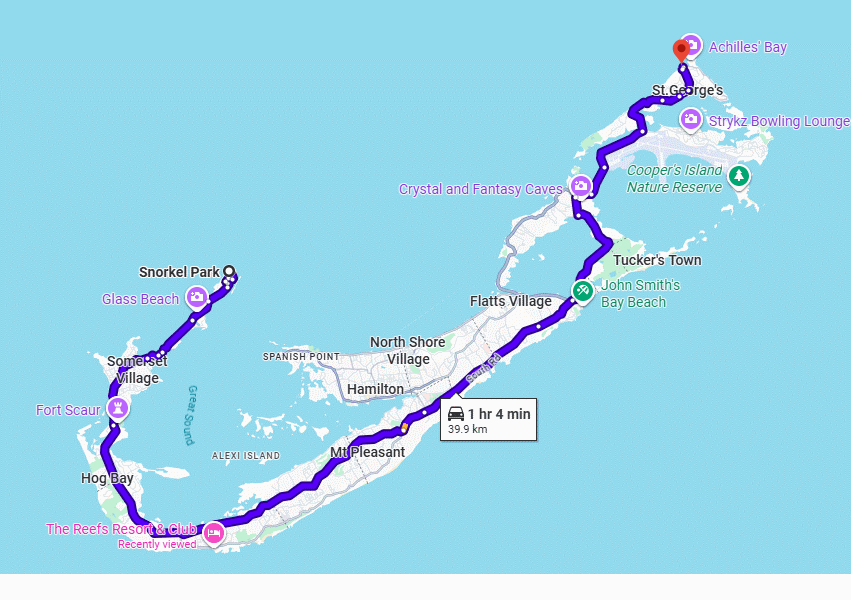
The Reefs Resort & Club, 56 South Shore Road, Southampton SN 02,
Bermuda
https://www.tropicalsnorkeling.com/snorkeling-the-reefs-resort-house-reef-bermuda/
:
I believe it is a private beach that doesn’t
allow non-guests or cruise-shippers to visit.
AI: The Reefs Resort & Club features a private beach and a
beautiful house reef ("boiler reefs") right off the shore, but it is
strictly reserved for registered hotel guests and is not open to the
general public or cruise passengers.
Two alternatives (but far away from our Airbnb):
- Church
Bay: Located a very short 15-minute walk west of The Reefs,
this is one of Bermuda's top shore-snorkeling spots. It features a
ribbon of spectacular, shallow reefs right off the beach that are
teeming with marine life. [1,
2]
- Horseshoe
Bay Beach: Located about a 5-minute drive (1.5 miles) east
of The Reefs, this famous pink-sand beach offers great snorkeling
around the rocky coves on the western side. [1,
2]
June 7 Sun - only 1 ship at Kings Wharf / Dockyard - Norwegian Jewel
https://www.cruisetimetables.com/kings-wharf-bermuda-cruise-ship-schedule-2026.html
If you have a bit of an adventurous side, check out the Blue Hole.
It's a salt water lake that you can jump into from 3 different heights. So
cook. Also, I believe Hamilton has street fairs every Wednesday during the
touring season.
Spittal Pond Nature Reserve -
animals
https://en.wikipedia.org/wiki/Spittal_Pond_Nature_Reserve
Other wildlife
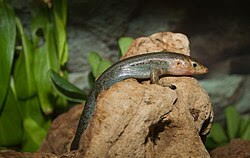
found in Spittal Pond Nature Reserve include the Bermuda rock skink (Plestiodon longirostris),
a critically endangered species,
silver-haired bat (Lasionycteris noctivagans),[14] Sally Lightfoot crab [Percnon
gibbesi] (west coast is red rock crab) and buckeye
(butterfly) (Junonia coenia).
Migrating humpback whales coming
out from Portuguese Rock can also be seen in the spring season. Eel
(Anguilla anguilla) is commonly found here.[5][7][10]
Birds
 The
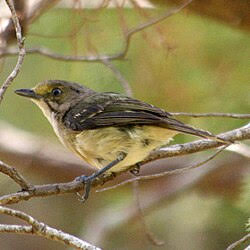
Bermuda White-eyed vireo is a
subspecies of White-eyed Vireo, endemic to Bermuda, which is more drab
and has shorter wings.[15]
The
Bermuda White-eyed vireo is a
subspecies of White-eyed Vireo, endemic to Bermuda, which is more drab
and has shorter wings.[15]
The lake is a
major transition area for migratory birds crossing the Atlantic Ocean,
and as such is a good birdwatching area. Twenty
bird species regularly winter here, while 200 species are reported as
migratory birds. There are 25 species of waterfowl, such as geese and flamingoes, which are common
sights.[1][7] Some
of the common species of birds reported are Bermuda white-eyed
vireo, cattle egret, great egret, snowy egret, American black duck, ring-necked duck, American wigeon, Eurasian teal and blue-winged teal. There are
also waders, coots, moorhens, and great blue, green and tricoloured herons.
During the spring season longtails, or white-tailed tropicbirds, are
a common sight.[5][9][10] Shorebirds
include various shanks, dowitchers and sandpipers. Eastern mosquitofish occur
in large numbers, helping with mosquito control and providing food
for the herons. White-tailed tropicbirds are reported to nest on the
coastal cliffs.[5]

